America’s energy story didn’t begin at an oil well; it began in the fields.
For 250 years, American farmers have played a vital role in feeding and fueling the nation. According to Jeff Manuel, a history professor at Southern Illinois University Edwardsville and coauthor of Ethanol: A Hemispheric History for the Future of Biofuels, agriculture has helped power America’s economy since its founding. Manuel spoke with Vital about the innovations, challenges, and turning points that have shaped the country’s energy history — and the role of biofuels in its future.
In the first decades after the signing of the Declaration of Independence and the American Revolution, farmers were feeding their oxen and draft horses as well as people. “They were growing the calories needed for an energy system that relied almost entirely on muscle power,” Manuel said. Alcohol in that period, which was primarily used for consumption, had its own role. “Transportation was difficult, so the ability to turn your grain into something easier to ship or store long term was helpful. Alcohol was much more compact and valuable.” Alcohol taxes also helped pay for the Revolutionary War, sparking Shay’s Rebellion among western Massachusetts farmers.
In the 1830s, alcohol blended with turpentine began replacing whale oil for illumination. Whale oil was favored over animal fats that congealed faster in colder temperatures. “But if you’re a farmer in the Ohio River Valley, it’s really expensive to get whale oil,” Manuel said. In the 1830s, tinkerers invented camphene, a mixture of alcohol and turpentine that burned more brightly and was cheaper than whale oil. The downside was that camphene was far more volatile and explosive.
Petroleum discovered
The 1860s were a turning point. The Civil War cut off the source of turpentine from southern pine forests just as petroleum came on the scene. Discovered in the late 1850s, the petroleum from western Pennsylvania was first refined into kerosene, a name invoking the familiar camphene.
As oil supplies grew, kerosene became cheaper than camphene and was safer to use. And, once again, taxes were levied to pay for a war. During the Civil War, the federal government revived and heavily increased alcohol taxes to help fund the Union war effort. Unlike earlier alcohol taxes, this “sin tax” was not repealed, staying in place for nearly half a century after the war.
During the last half of the 19th century, Manuel continued, “there’s not a lot of action happening with alcohol fuels in the United States because kerosene is everywhere. But Europe, where the internal combustion engine was invented, didn’t have the abundance of petroleum.” German inventors, in particular, worked with local potato alcohol.
Knowing how Europeans were utilizing alcohol, very early engineers and professors asked whether the U.S. should follow that model. “We found one report where a professor from Columbia University in New York sent out letters to ask all these tinkerers why they were only using gasoline. The answer across the board was that it was cheaper.”
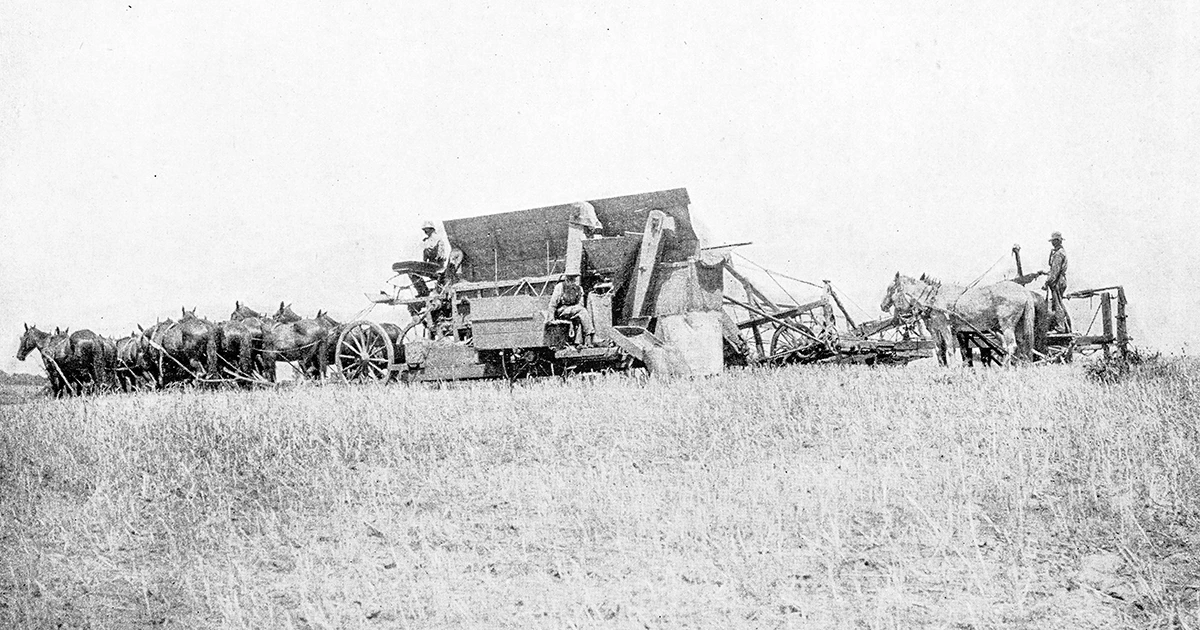
As the petroleum age gained steam, agriculture also was changing. “As you head into the 20th Century, we get the origins of commodity agriculture,” Manuel said. “Farmers began growing things with an eye towards selling them in the market and specializing in a handful of crops.” Commodity farming really took off with the big bonanza wheat farms on the prairies. In the Corn Belt, however, the move towards specialization in corn and soybeans didn’t emerge until after World War II.
Power alcohol era
The turn of the century also brought mechanization and growing productivity. “A central story of 20th-Century U.S. agriculture is what historians call the ‘Problem of Plenty,’” Manuel continued. Two approaches emerged to address the growing surpluses: find new markets or grow less. “I think almost universally, farmers have preferred finding new markets,” he said. “And alcohol has been one way that goes back for 100-some years of trying to break into the energy market by
turning crops into alcohol fuels. Alcohol could run those internal combustion engines.”
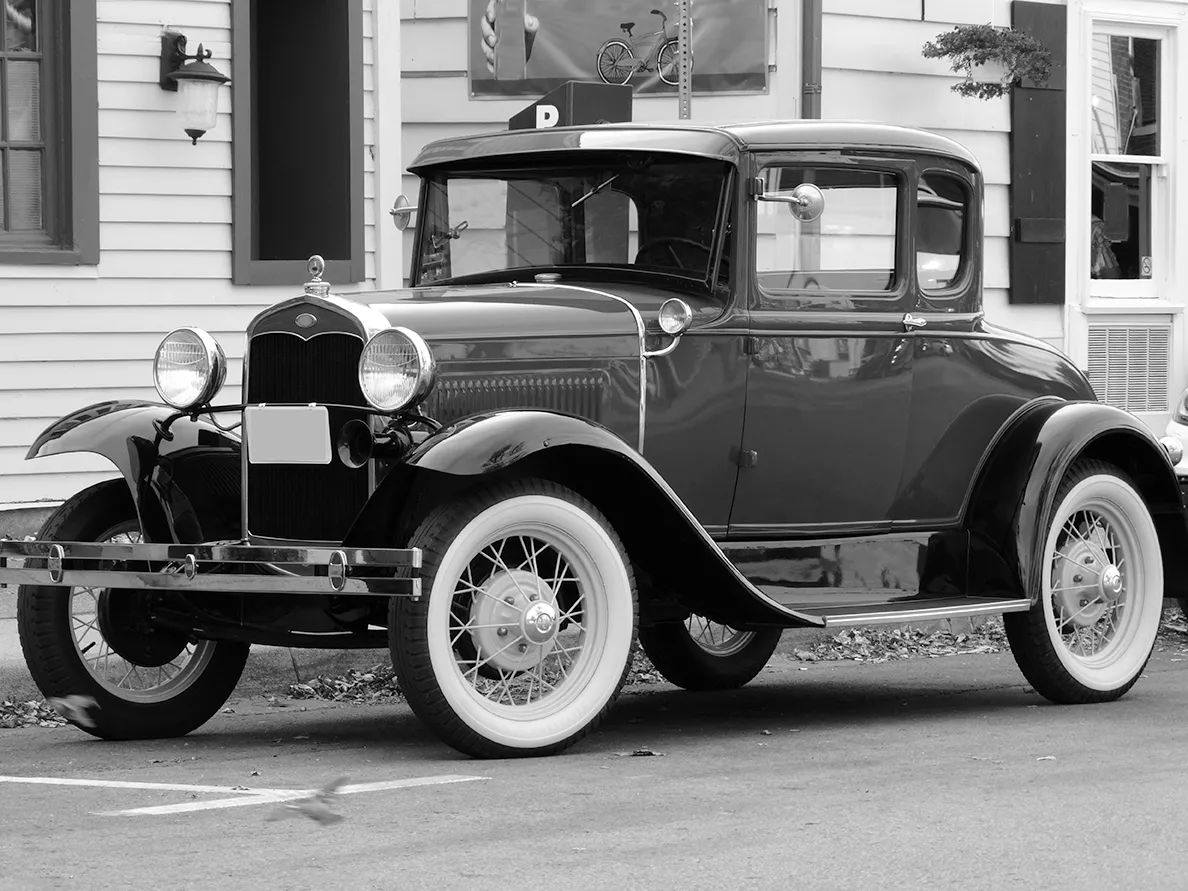
Henry Ford was a big supporter of alcohol fuels, building his Model-Ts to run on either alcohol or gasoline. “For decades, the oil industry had catered to the lighting business. But in the late 19th century, you got a competing source of illumination with electricity. The oil industry shifted and catered to the internal combustion engine. It happened so quickly in the 1910s and ‘20s that there was fear of shortages. There were government studies, one in 1919, warning of a quickly coming gasoline famine. The obvious substitute was going to be alcohol.”
But as alcohol fuels showed promise, powerful interests in the oil industry had other plans. Standard Oil founder John D. Rockefeller helped fund the temperance movement, which pushed for Prohibition. The 18th Amendment effectively stifled the emerging alcohol fuel industry, despite provisions allowing alcohol to be used for fuel. The timing was particularly unfortunate for American farmers and distilleries, which were struggling economically and could have benefited from a growing market for fuel alcohol during the oncoming Great Depression.
The Power Alcohol movement emerged in the Depression Era of the 1930s, Manuel said, “trying to solve this enormous problem with the Depression in rural America. There was a lot of food, but no demand. Power Alcohol was one response that had the government mandate the use of alcohol fuels to create demand for crops that were rotting in the fields. Ultimately, Power Alcohol never took off. And the reason is that gasoline was incredibly cheap.”
World War II increased demand worldwide, Manuel said. Thoughts of substituting alcohol for oil fell away as the sentiment shifted to “grow as much as you can, pump as much as you can. There will be someone to take all of it.”
After the war, suburbia expanded, and big, gas-guzzling cars motored down newly built interstate highways. “This period in the 1950s and 1960s is when America was probably its most oil-dependent. Farmers were, for the most part, doing okay as they started to adopt commodity growing methods — the origins of what we now think of as modern agribusiness. And they were exporting worldwide, with things like the Food for Peace program.”
For a few decades, in the mid-20th Century, “no one thought much about alcohol fuels. They didn’t really think about the energy system. And that’s also when farmers got really tied into the fossil fuel system, using new chemicals that came from fossil fuels. Farmers mechanized heavily, and the fuel bill became an important part of a farmer’s bottom line.”

Gasohol movement
The resulting vulnerability to oil prices and supply, Manuel said, “came home to roost in two energy crises in the 1970s, the first with the Arab oil embargo of 1973 and 1974 and the other at the end of the decade with disruptions from the Iranian Revolution. Both dramatically spiked the price of oil and caused supply disruptions, alcohol fuel came back on the scene.”
Simultaneously, the Problem of Plenty reared up again, with huge corn surpluses driving down prices. The Power Alcohol touted 50 years earlier got a new name — gasohol — and a grassroots movement inspired farmers to build on-farm stills, one of which was built on the Broin farm and ultimately led to the genesis of POET.
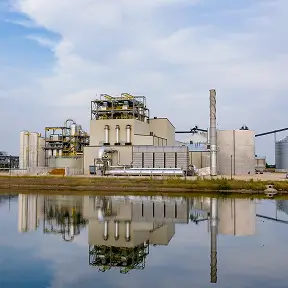
On-farm stills and early one- to three-million-gallon plants were generally too small and inefficient to be economically viable and were shuttered, Archer Daniels Midland, who built the first large plants in the U.S., became the dominant supplier of bioethanol for blending. Nonetheless, a few 10-million-gallon-per-year plants were built and survived, only in the handful of states that incentivized local gasohol production.
The 1980s brought one of the most severe financial crises in modern American agriculture. Falling commodity prices, declining land values, high interest rates, and mounting debt pushed thousands of farms into bankruptcy and foreclosure. At the same time, the nation faced large agricultural surpluses and too little demand, leading the government to pay farmers annually to take millions of acres out of production. For farmers, the crisis underscored a fundamental challenge: America could produce an abundance of food and feed, but needed new markets to support the value of what they grew.
While the 1970s were all about energy security and the 1980s about finding new uses for surplus corn, heading into the 1990s, the arguments for and against bioethanol and gasoline started to center on environmental issues, Manuel said. At the turn of the century, the oil industry added tetraethyl lead to gasoline as its preferred anti-knock additive, rather than alcohol. “The
auto and oil industries were well aware of how bad it was, but kept on doing it for decades. We finally got lead out of the U.S. fuel supply in the 1970s, but there were debates on what was going to replace it. Bioethanol made perfect sense, just as it had years before, but petroleum-based MTBE was added. Yet, bioethanol ended up as the last and best option after lead and MTBE proved to be so toxic.”
The Clean Air Act, adopted in the 1970s, phased out leaded gasoline, and the 1990 amendments to the legislation tightened oxygenate requirements. Work began building support and crafting a renewable fuel legislation that would require biofuel blending into the nation’s fuel supply to address the farm economy, clean air, and energy security.

21st-Century growth
The passage of the Renewable Fuel Standard, aligned with the banning of MTBE in multiple states and increased oil prices, boosted bioethanol prices and set off a building boom. The bioethanol industry, numbering just 50 plants in 2000, grew to roughly 200 by the end of the decade, and production grew from 1.5 billion gallons to over 13 billion gallons annually.
As the bioethanol industry scaled up from less than 1% of the nation’s gasoline supply in 2001 to more than 10% today, agriculture benefited significantly from the growth of this new market. U.S. farm income nearly tripled, while land more than doubled, creating $2 trillion in new land value for farmers.
The past decade has seen the environmental discussion move beyond clean fuel and air to address climate change through decarbonization, which Manuel suggested isn’t going away. This year’s global oil disruption is also exposing the world’s dependence on petroleum, driving a heightened interest
in renewables.
The history of energy in the U.S. has often been one of substitutions, Manuel said. “Oil’s big advantage for 150 years is that, many times, it was quite a bit cheaper than alcohol fuel. As historians, we ask why, and for most of the mid-19th and early 20th Century, it’s because we were the largest oil producer. Through fracking, we’re back to being the world’s largest oil producer.” The oil price spike from $15 a barrel to $60-100 a barrel created the opportunity for bioethanol to be a lower-cost option to petroleum, even unsubsidized and at much higher corn prices, as seen in the last decade. In other words, bioethanol is here to stay.
Manuel also pointed out that new markets are opening where bioethanol promises to be a sustainable substitution for aviation and maritime fuels — perhaps the start of a new era in America’s energy economy.
That may be the most important lesson from 250 years of America’s energy economy: The sources of energy may change, but opportunity follows wherever new markets emerge. Today, biofuels are doing more than providing an alternative to petroleum. They are connecting America’s farms to a growing energy economy, creating demand for what farmers grow, and opening the door to the next generation of agricultural opportunity. The energy transition marks the beginning of a new era, with American agriculture helping fuel what comes next.