Running out of steam isn’t just a figure of speech; at POET Bioprocessing – Big Stone, finding a better way to generate and manage steam has been a focus of innovation for several years. Now this South Dakota-based plant is harnessing the power of a 5 gigawatt-hour, multi-day thermal energy storage system that’s making biofuel production more efficient, resilient, and sustainable.
“This is a potential game-changer,” said DJ Haggerty, Plant Manager at POET Bioprocessing – Big Stone. “It’s first-of-its-kind technology, and it’s working really well.”
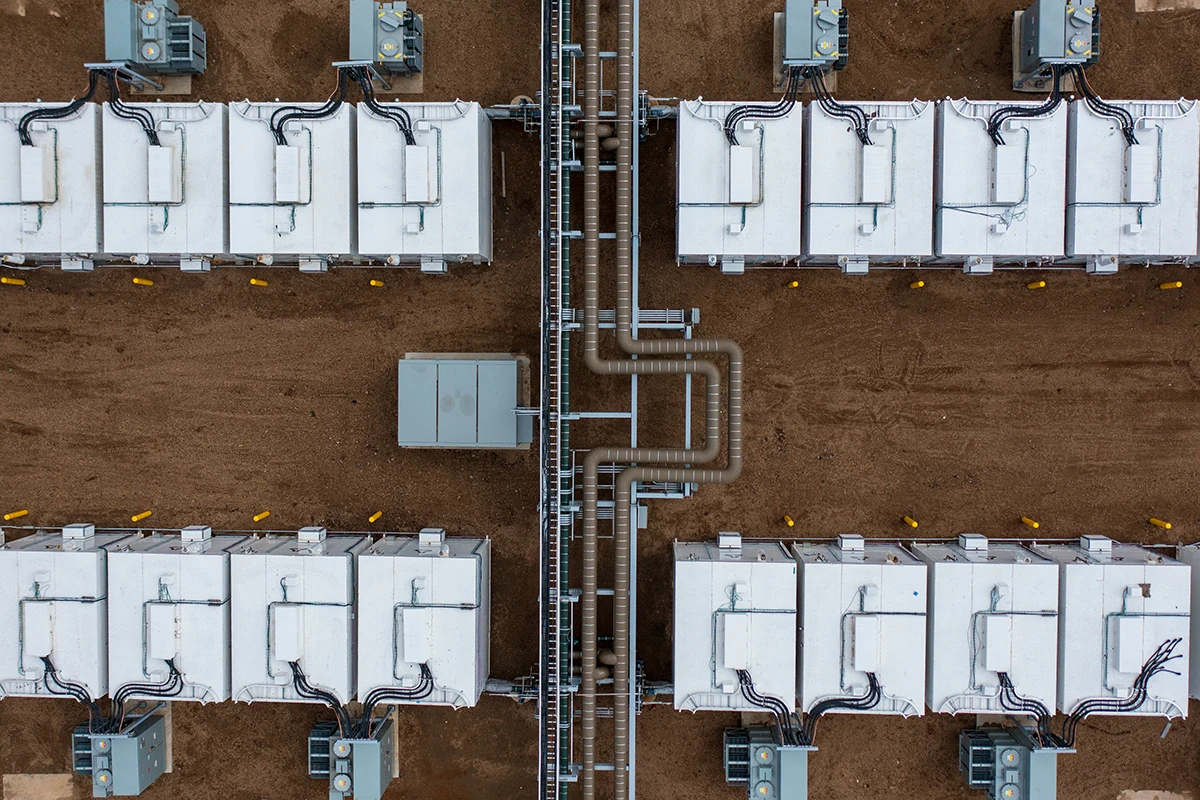
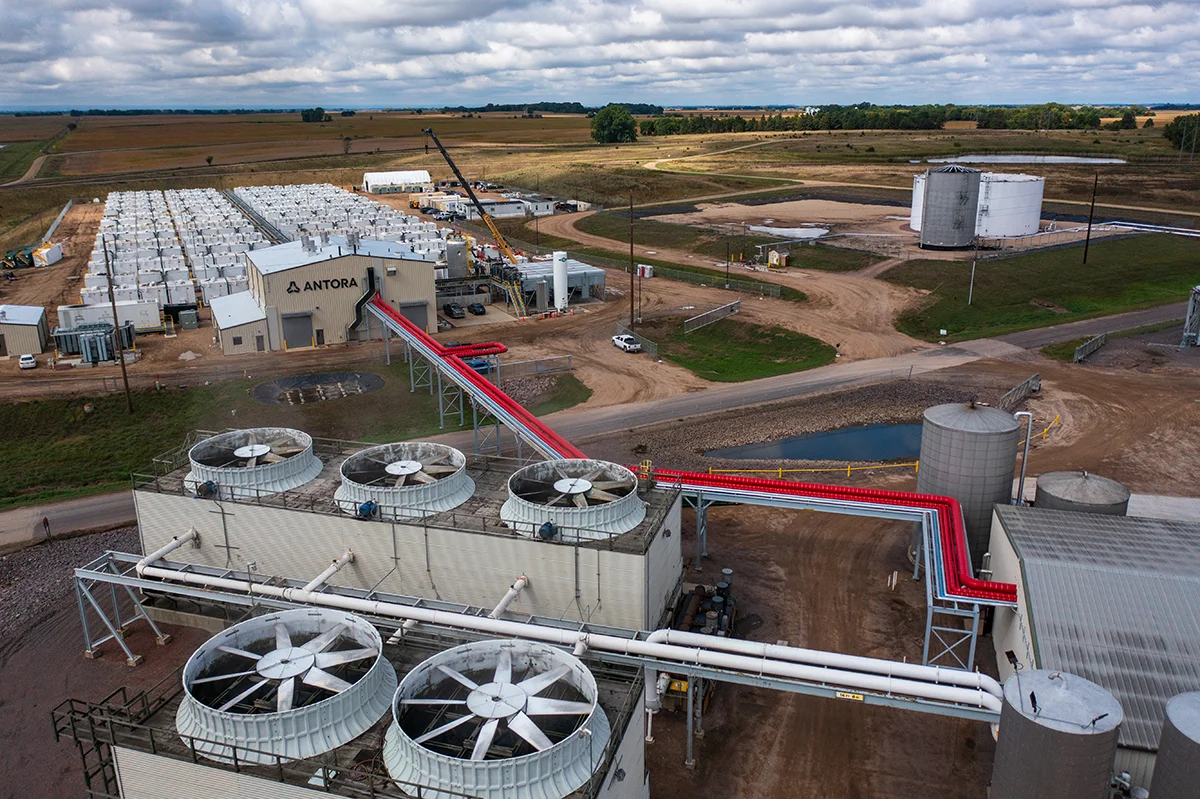
Designed and manufactured by Antora Energy, this innovative technology is one of the biggest battery systems on earth. This landmark project includes 224 thermal batteries, covering roughly 5 acres near the POET facility. The system delivers competitively-priced, around-the-clock energy to the POET – Big Stone plant through a long-term energy offtake agreement. Using waste renewable electricity from from wind turbines to charge carbon-based thermal batteries, it will provide reliable, zero emission “clean steam” to meet a portion of the facility’s needs, reducing reliance on other forms of energy.
The project advanced from initial construction to providing energy in less than 12 months and is slated to be fully operational this year. This system demonstrates POET’s commitment to continuously improving the cost-effectiveness and efficiency of its operations while producing bioethanol at the speed needed to meet today’s
fuel demand.
“For the first time in decades, domestic energy demand is growing fast,” said Jordan Kearns, Executive Vice President of Project Development for Antora Energy. “With that growth, however, come challenges, from tight supplies to expensive peak hours. Our technology helps meet this demand by supplying reliable, affordable energy by making better use of the grid we have today.”
Always-on heat and power
The need for this thermal energy storage system at POET – Big Stone evolved over time. When the plant was built in 2002, it received steam from a coal-fired power plant next door.
Growth in biofuels demand led to a plant expansion in 2006. POET – Big Stone set production records by 2019, when the plant produced nearly 100 million gallons of bioethanol in one year.
However, in some years, energy supply constraints from the power plant limited the plant’s ability to operate at full potential. “This reduced our plant’s ability to operate at full capacity, especially in the winter,” Haggerty noted. “Less steam meant reduced output.”
When Antora reached out to POET in 2023 with a potential solution, Haggerty and the team were skeptical.
The more the POET team learned about Antora’s technology, though, the more it made sense. “An energy storage system like this is like building grain bins to store the grain you harvest,” Kearns said. “It’s a practical way to store energy when power production is abundant.
Solid carbon blocks with electric heating elements (similar to giant toaster coils) power Antora’s system. These thermal batteries can store four times as much energy as electrochemical batteries with the same volume. “The carbon is akin to the graphite in pencils,” Kearns said. “It’s the most affordable way to store energy and make it available around the clock.”
The carbon blocks allow ultra-fast charging during the cheapest hours
of electricity generation, when there’s little demand for the surplus power.
“This takes the intermittent nature of renewable energy out of the equation,” Haggerty said.
The carbon blocks store energy at temperatures up to 2,400° Celsius (4,300+ degrees Fahrenheit) in a compact, modular system. “These ultra-high temperatures enable our system to store large amounts of energy and serve continuous industrial demand for days on end,” Kearns said.
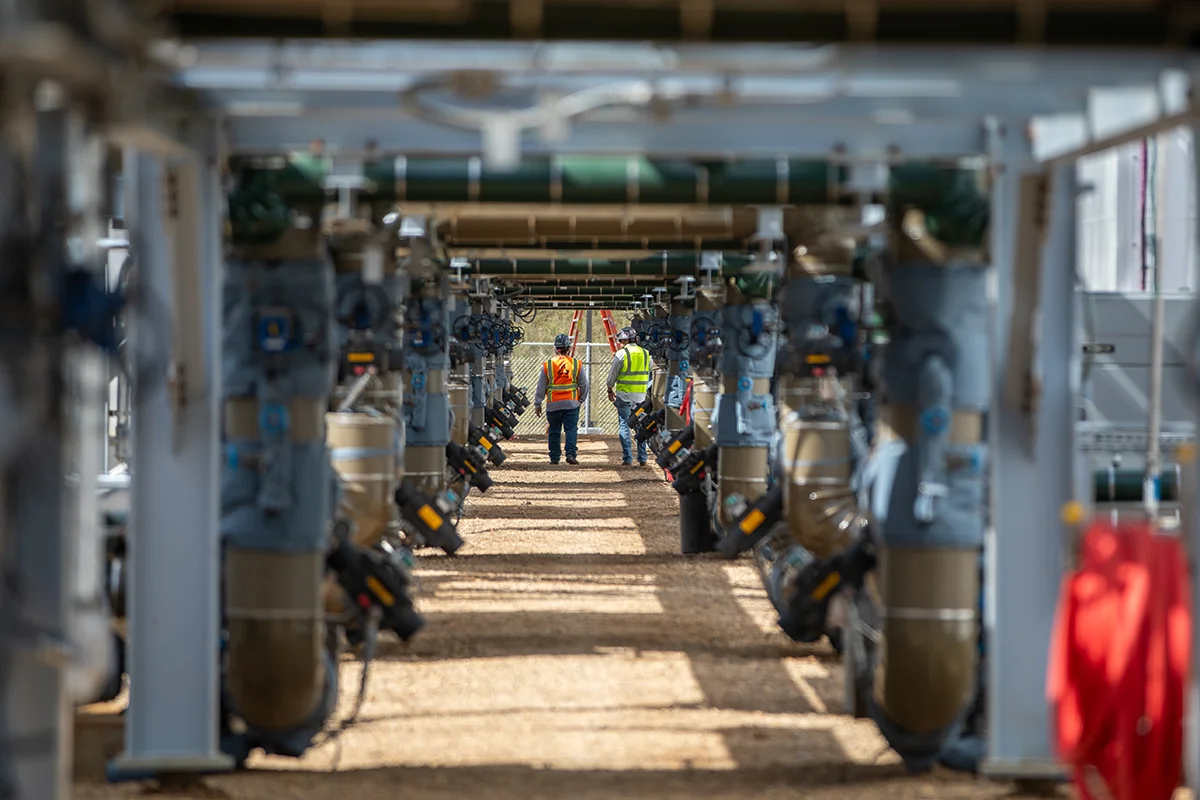
Energy is discharged around the clock as heat, which is then delivered to industrial processes like biofuel production at the POET plant. “We buy the ‘clean steam’ that keeps the plant running consistently, 24/7,” said Haggerty, who noted that there was no investment on POET’s part to build the
Antora system.
Antora also worked closely with Otter Tail Power — which provides power at some of the lowest costs in the nation to customers in South Dakota, North Dakota, and Minnesota — to develop an innovative electric rate. This enables the system to deliver 24/7 energy, and, by spreading the grid’s fixed costs over more power sales, helps reduce costs for other consumers.
All this means the system can selectively and rapidly charge during periods of surplus local energy production, making better use of existing grid infrastructure. “This offers a model for utilities across the country to integrate thermal energy storage and benefit everyone on the grid,” Kearns said.
“That’s exactly what we’re focused on — pushing the boundaries of what’s possible and delivering viable solutions that create more efficient bioethanol production, lower energy costs, and stronger rural economies.” -Jeff Broin, POET Founder and CEO
Revitalizing American manufacturing
Antora’s thermal batteries, which are built in San Jose, California, continue to boost efficiencies and lower costs at POET’s Big Stone facility.
This is helping POET produce more affordable, homegrown fuel that reduces harmful emissions and lowers prices at the gas pump.
“Our nation’s energy future will be defined by innovation,” said Jeff Broin, POET Founder and CEO. “That’s exactly what we’re focused on — pushing the boundaries of what’s possible and delivering viable solutions that create more efficient bioethanol production, lower energy costs, and stronger rural economies.”
Boosting production at the POET – Big Stone facility through this thermal technology will create tens of millions of dollars annually in new market opportunities for South Dakota farmers. “It opens up more grain purchasing from local growers,” Kearns said.
Delivering reliable, affordable energy to POET has broader implications beyond biofuels. “We’re proud of what this deployment means for American manufacturing,” said Andrew Ponec, Co-Founder and CEO of Antora Energy. “This is what reindustrialization looks like — American innovation driving industrial competitiveness, domestic supply chains spanning a dozen states, and jobs from the factory floor to the construction site.”
Opportunities abound for long-term thermal energy storage, from food production facilities to chemical plants to other industrial facilities across the country. “What we’ve built in South Dakota shows Antora can deliver the reliable, affordable energy required for American competitiveness,” said Kearns.
Haggerty is excited about the possibilities. “This technology is allowing POET to produce more bioethanol, more efficiently. We’re also reducing emissions. The more renewable energy we can make here at home, the better.”