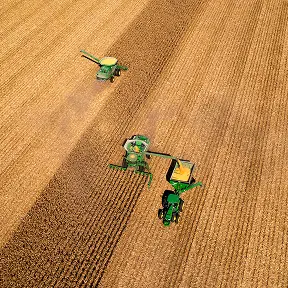
If I ask you what a farm looks like, you probably envision a field of corn, where 10 steps in, you could get lost amid towering stalks. Or row upon row of beans, wheat, or potatoes ready for harvest.
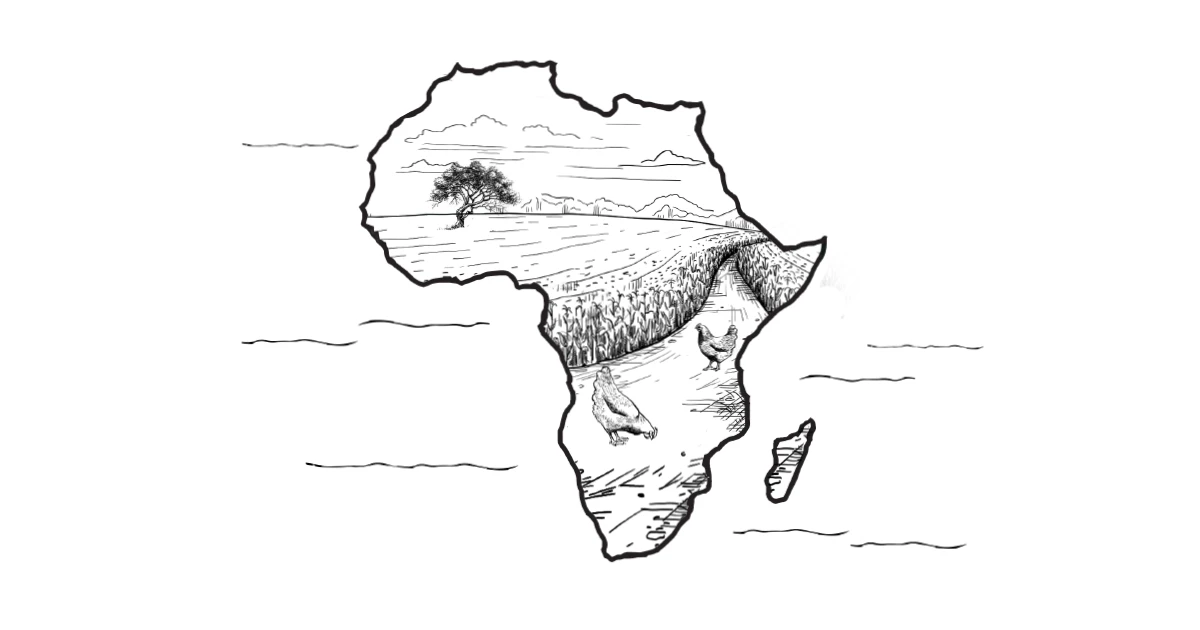
In Africa, the picture of a farm is starkly different: a one-acre plot with five or 10 crops, a handful of chickens, maybe a pig or a goat. All of the plants and animals are much smaller than what you would see in the U.S. Many farms could be categorized as sub-subsistence — what they produce is barely enough to survive on.
That is the challenge that FIPS (Farm Input Promotions) Africa has fought for the last twenty-three years. It is work that has been made successful in large part thanks to the generosity of Jeff and Tammie Broin and their nonprofit foundation, Seeds of Change.
FIPS Africa was founded in 2003 as a nonprofit in Kenya. Our motto is “Small Farms, Big Futures,” and we have worked hard to create systems for food security, real income, and resilience to the shocks that life throws at rural families: drought, flooding, medical emergencies, whatever may come. Since 2020 alone, we’ve reached 2.06 million farmers, roughly evenly split between Kenya and other African countries such as Madagascar, Burundi, Togo, Sierra Leone, Uganda, and Tanzania. Our success has, in recent years, prompted governments and partners to ask us to help them replicate what we’ve built.
There are two key pillars to our strategy. The first is directly working on resilience and income for small farmers. That means helping farmers with education and resources to improve soil health, crop varieties, livestock, chickens, fruit trees, and more.
The second is enabling food systems that catalyze businesses to support farm enterprises that support or provide services to farmers. Today, that includes over 3,500 businesses serving farmers, from 134 large organizations, like seed and off-taking companies, to 2,900 “last-mile” businesses, such as our village-based advisors (VBAs). These are local farmer-representatives who vaccinate livestock and sell seed door-to-door. We’ve also signed agreements with eight county governments and four national governments to help shape the rules and regulations that allow our process to work.
One story that illustrates what we do is our work with potatoes. We recently completed a program with 75,000 farmers. Before FIPS, many of them were using potatoes from local markets for seed, many of which were diseased or unproductive. Today, 74% of farmers access quality seed directly through our VBAs, and reliance on recycled seed has dropped from 41% to just 12%. Our seed advisors are earning about $4,200 per acre, and the farmers buying from them are earning about $2,000 more per acre than before.
This is real, life-changing income, and it is a system that lasts. In Meru, Kenya, where we finished our direct support four years ago, 80% of those VBAs are still operating today.
The benefits extend beyond the farm. In many cases, the additional income generated from their improved farming operations allows families to pay school fees for their children and buy household necessities. Although young people in rural villages don’t always look to farming as their first choice, it is often the most accessible path to take. Through our youth ag education programs, we have helped 64,000 young people build careers in agribusiness.
We plan to do more in the future. Over the next eight years, we are targeting 5.5 million farmers, with a goal of at least 3.3 million becoming thriving, self- reliant, and resilient, earning enough through their work to truly transform their lives. We hope to expand our VBA network to 15 countries. We must also continue to gather evidence of the effectiveness of this work to convince governments, businesses, and other funders to be part of this change.
The goal is to leave behind a self-sustaining system that leads to growth and prosperity across Africa — and across the globe. Our work to date has proven it can happen. With the support of our partners like Seeds of Change, our work in the future will make global food security a reality.
To donate or learn more, visit seedsofchange.org.