Growing Land Opportunities for Farmers, Landowners, and Our Community
Carbon capture and storage in North Manchester, Indiana
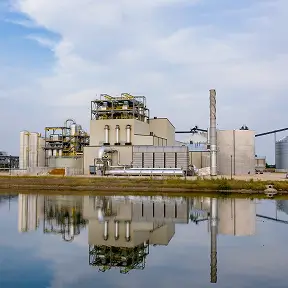
At POET, we know that strong rural communities are built on hard work, partnerships, and a commitment to the next generation. That's why we're bringing a Carbon Capture and Storage (CCS) project to North Manchester — a once-in-a-generation opportunity to help strengthen local agriculture, bring new investment to the area, and support our rural economy.
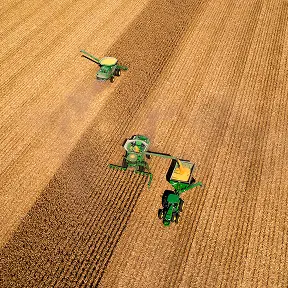
CCS brings major benefits to North Manchester and Wabash County. It unlocks significant markets, such as sustainable aviation and marine fuels, which require significant carbon reductions for ethanol feedstocks. For Wabash County, it means real, local impact, including boosting grain demand and local corn basis for farmers, supporting high-quality jobs, and increasing local property tax revenues that fund schools, infrastructure, and community services.
"POET has always been a proud partner to Wabash County. Our team and our families live and work in this community. CCS is one of many ways we're investing in the future - helping ensure agriculture and family farming remain strong for generations to come." - David Pyle, General Manager of POET Bioprocessing - North Manchester
POET's local impact
Facility start up
Corn farmer partners
Local team members
In annual wages
In charitable giving in 2024
POET - North Manchester Annual Production
Corn bushels ground
Corn purchased
Gallons of ethanol produced
Tons of DDG feed produced

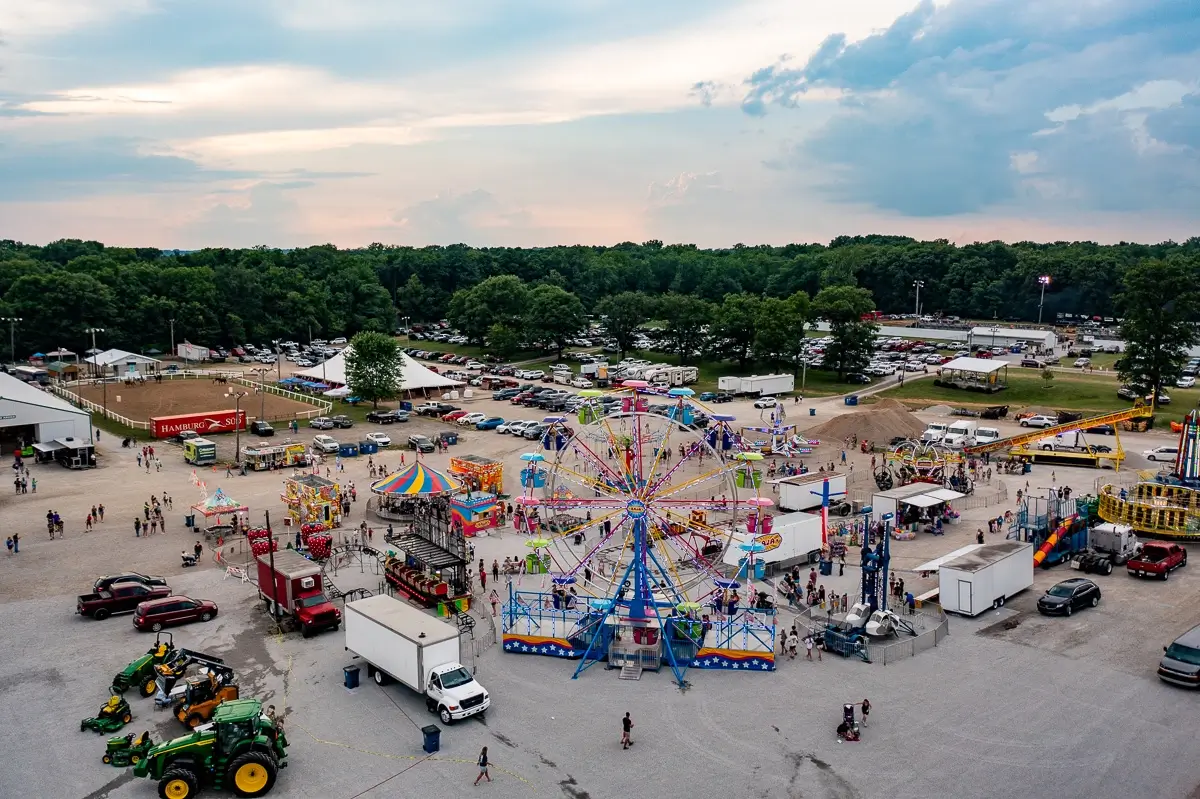



Community partnership fund
Investing in the future of Wabash County
We have a special relationship with the communities we call home. POET's neighbors often include our first investors, corn suppliers, feed customers, and team members' families. We are 100% committed to the well-being and long-term success of this community. We believe carbon sequestration is the next big opportunity for bioprocessing and it can generate tremendous benefits for the entire county.
We want everyone to share in the value of this project, including neighboring landowners, family farmers, local construction workers, truckers, and residents across Wabash County.
Here's how it works
- The Fund will allocate a portion of the federal tax incentives we're eligible to receive for permanently sequestering CO2 and invest that money directly back into the community.
- POET will donate $2.00 per metric ton of carbon sequestered. As long as POET is actively sequestering CO2, the county will receive an annual payment of up to $500,000. That could build to a combined total of $6 million over the life of the project!
- There are no strings or stipulations attached–the county is free to use the funds however it sees fit.
- The funds could be used for roads, parks, schools, emergency services, or whatever matters most.
This partnership reflects POET's belief that everyone in the community is a partner and deserves to benefit from the project's success.
Payment value
Program duration
Recipient and use of funds
Frequently asked questions
All surface infrastructure associated with the project will be on POET owned property.
Only a small number of landowners at each facility will be directly involved in the project. POET and Vault team members have engaged in conversations with those landowners about voluntary participation for their subsurface pore space. The CO2 storage area is located roughly 3,000 feet below the surface and remains within three-quarters of a mile from the injection site on POET's property.
Vault is POET's partner on this CCS project.
POET has been exploring CCS options in Indiana for more than two years. POET chooses its partners carefully, and we are confident that Vault's team will construct and manage a successful sequestration system while building positive relationships in the local communities.
The Vault team has been formed to bring individuals with decades of experience to this business; their senior team alone has collectively over 150 years of combined experience in carbon sequestration and subsurface technical experience.
Vault's team of professionals has been involved in many major CCS projects, both in the United States and globally. They bring decades of professional, operational, and technical experience to this project, in addition to projects that are further along here in Indiana. We are confident in their ability to safely and successfully complete this project.
Carbon Capture and Storage is a process that captures carbon dioxide from industrial sources and permanently injects it in geologic formations deep underground.
CCS unlocks significant markets, such as sustainable aviation and marine fuels, which demand low-carbon fuels. New biofuels markets add value to grain, extend our partnership with family farmers, and keep agriculture thriving.
Safety is our top priority. We're working with expert engineers and regulators to meet or exceed every standard.
This isn't a new or experimental technology; it's been done safely in the U.S. for decades. The project poses minimal risk, as all carbon capture will occur on-site at POET. CO2 will be injected over 3,000 feet underground and secured by multiple layers of natural and engineered containment. Seismic testing confirmed a an anticipated thick, porous layer of sandstone with strong caprock above-critical features for secure containment.
The EPA will conduct a rigorous review and permitting process to verify long-term geological integrity and environmental safety. POET will meet or exceed all applicable state and federal standards, including those governed IN Department of Natural Resources.
Redundant safety systems, real-time monitoring, and automatic shutdown protocols ensure the protection of our team members, surrounding communities, and the environment. If an automatic shutdown were to occur, the CO2 being injected would revert back to being released out of the smokestack like it is today.
Bioethanol production produces 99% pure CO2. North Manchester also has compatible geology that allows for deep well injection on-site. Indiana is uniquely positioned to take advantage of this technology due to its subsurface characteristics which includes deep injection reservoirs, and impermeable caprock to prevent migration of CO2.
This project location also has support from a significant number of neighboring landowners, who have voluntarily joined our project.
No.
The primary purpose of the Class VI permit is to ensure no impact to potable sources of drinking water occurs. The injection reservoir lies over 2,500 ft from the average water well in Wabash County.
The storage formation being used, the Mt. Simon Sandstone, has safely supported injection activities for decades, including natural gas storage and other well types across the region. For example, the Royal Center Gas Storage Field, located about 35 miles from the project, has operated since 1957.
Before any permit is approved, the EPA requires a rigorous geologic review. Extensive site-specific analysis has already shown this is a suitable location for sequestration, and this finding must be reviewed and approved by the EPA before the project can move forward.
In addition, the project will include continuous monitoring through downhole pressure gauges and a dedicated seismic monitoring system. If any seismic activity exceeds a predetermined level, a "stoplight" protocol requires operators to reduce injection rates or shut down operations until the event is fully evaluated.
There is no pipeline. The injection equipment and well are all contained on POET's property.
The project will be closely regulated and monitored by state and federal agencies, including the Indiana Department of Natural Resources and U.S. Environmental Protection Agency, ensuring safety and no impact to drinking water.
The few landowners who will be involved are compensated for the use of pore space more than 3,000 feet underground. There is no surface impact, allowing farming, building, and other activities to continue. Landowners also retain their mineral rights.
A majority of the impacted landowners have already voluntarily agreed to participate in the project.
This project is about unlocking new low-carbon fuel markets, such as sustainable aviation and marine fuels.
POET will invest $60 million into building the project, not including development, operation costs, or landowner payments. The tax credits will be used to minimize the risk associated with the upfront investment POET is making to develop, construct, and operate the system. POET does not intend to seek any local tax abatement for our investments, adding additional dollars to the property tax basis.
POET does not receive any credits until CO2 is permanently and verifiably sequestered, meaning the value must be earned through real, measurable results. Backed by bipartisan support for decades, 45Q makes it possible for POET to invest in CCS technology that will strengthen rural economies, open new markets, and benefit farmers long into the future.
What makes POET's approach unique is our decision to share a portion of these tax credits directly with the community through our Community Partnership Fund. As part of this program, POET could contribute up to $6 million in direct local investment over the life of the project.
No. CCS will not increase POET Bioprocessing - North Manchester's water usage.
The Area of Review (AOR) is the region surrounding a Class VI project that must be evaluated to identify and manage potential risks to underground sources of drinking water. This area is typically larger than the pore space needed for the project itself. The AOR is not focused on surface impacts or equipment leaks; rather, it is part of the regulatory safeguard designed to ensure that deep underground drinking water resources remain protected during and after the project.
This project's AOR was created when the Class VI permit was drafted in 2024.
Yes, there will be public meetings throughout the permitting process. Because this is a two-year permit and vetting process, there is ample time to work closely with counties and community members to ensure the public is informed, questions are answered, and feedback is heard. Community education and transparency will remain key priorities every step of the way.